How to keep your house warm without turning up the heat
Practical ways to stay warm this winter without moving the thermostat: sealing draughts, warming surfaces, dressing for it, and heating the room you are in rather than the whole house.
The cheapest kilowatt hour is the one you never needed. Before touching the thermostat, there is a surprising amount you can do to make a house feel warmer at the same setting — and most of it is free or nearly so.
Start with the fabric, if you can
Insulation is the highest-value intervention there is. Reduce the rate at which heat leaves and you reduce everything downstream of it.
We are aware this is easier said than done. Budgets, rental agreements and listed buildings all get in the way. So here are the interventions in rough order of disruption.
Windows. Double glazing, or better, a low-emissivity coating. The coating is effectively invisible and reflects infrared back into the room, which keeps heat in during winter and out during summer. Windows are a large share of a typical dwelling’s heat loss, so this is where the money goes furthest for the disruption involved.
Internal wall insulation. More intrusive — it means working inside the rooms and losing a little floor area — but transformative on a solid-wall property. Worth noting that a solid uninsulated external wall should be insulated before you put heating into it, or you are warming the outdoors.
Floors. Insulating beneath a suspended ground floor is unglamorous and pays back well, particularly in older houses where the void underneath is ventilated to the outside.
Then chase the draughts
Sealing air leaks is the best value work in the whole list, and it is largely a Saturday afternoon with a tube of sealant. Estimates from energy agencies put the saving from draught-proofing in the region of 10 to 20% of heating energy.
Draught excluders at the base of doors and windows. Buy them or make them: a fabric tube filled with rice, foam or old fabric works exactly as well as anything sold in a shop.
Seal the obvious gaps — around window frames, letterboxes, loft hatches, disused chimneys, and where pipes and cables pass through external walls.
The reason people neglect this is that each gap looks trivial. Add them together and you have the equivalent of leaving a window open all winter, with heated air walking out through it. It is also the cold-surface downdraught problem: a cold surface generates moving air even with no gap at all, which is why you feel a “draught” beside a single-glazed window on a still day.
Thermal curtains, used properly
Lined curtains add a layer of insulation across the coldest part of the wall. The trick is the routine rather than the curtains:
- Open them during the day and let the sun in. Solar gain through a south-facing window is free heat.
- Close them at dusk, before the room starts losing what it gained.
Heavyweight fabric with a thermal lining does the job. One caveat: with single glazing in a cold climate, curtains alone will not save you. They reduce the loss; they do not solve it.
Use the heat you are already making
Cooking generates a great deal of heat, and most of it goes up an extractor fan.
After you have finished baking, leave the oven door open and let the residual heat into the kitchen — with the obvious caution if there are small children or pets around. Close the kitchen door while you cook and eat, and you have effectively heated one room for nothing.
The same logic applies to occupancy. Each person in a room is radiating around 100 W. A full room genuinely needs less heating than an empty one.
Dress for the temperature you have
Not a joke, and not a trivial effect. Clothing insulation shifts the temperature at which you are comfortable by several degrees — more than most of the other variables combined.
- Layer. A thin moisture-wicking base, a thermal or wool mid-layer, and something cosy over the top.
- Cover your feet properly. Feet are disproportionately good at making you feel cold, and thick socks or slippers are the highest-return item of clothing in the house.
- Do not overdo it. Layering to the point of sweating is counterproductive; damp clothing cools you.
Deal with cold floors
Hard floors — tile, stone, engineered board — conduct heat out of your feet quickly, and cold feet make an entire room feel cold regardless of the air temperature.
Rugs are the cheap answer. They break the conductive path and add an insulating layer, and they work immediately.
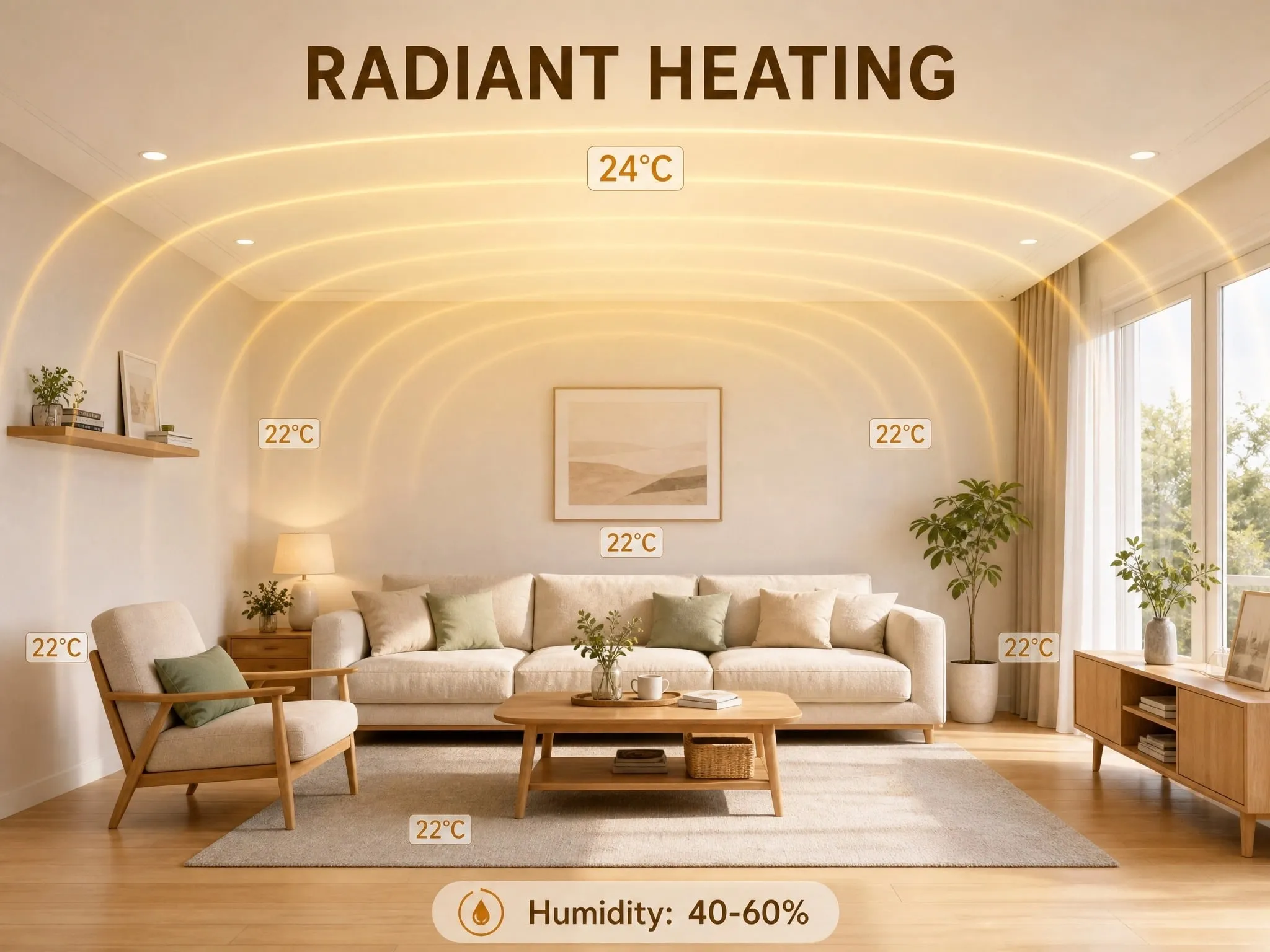
A heated floor is the proper answer. If you are already replacing a floor covering, this is the moment to consider it: an element a few millimetres below the finish turns the coldest surface in the room into the warmest, and a warm floor makes a room feel comfortable at a noticeably lower air temperature.
Find your cold spots
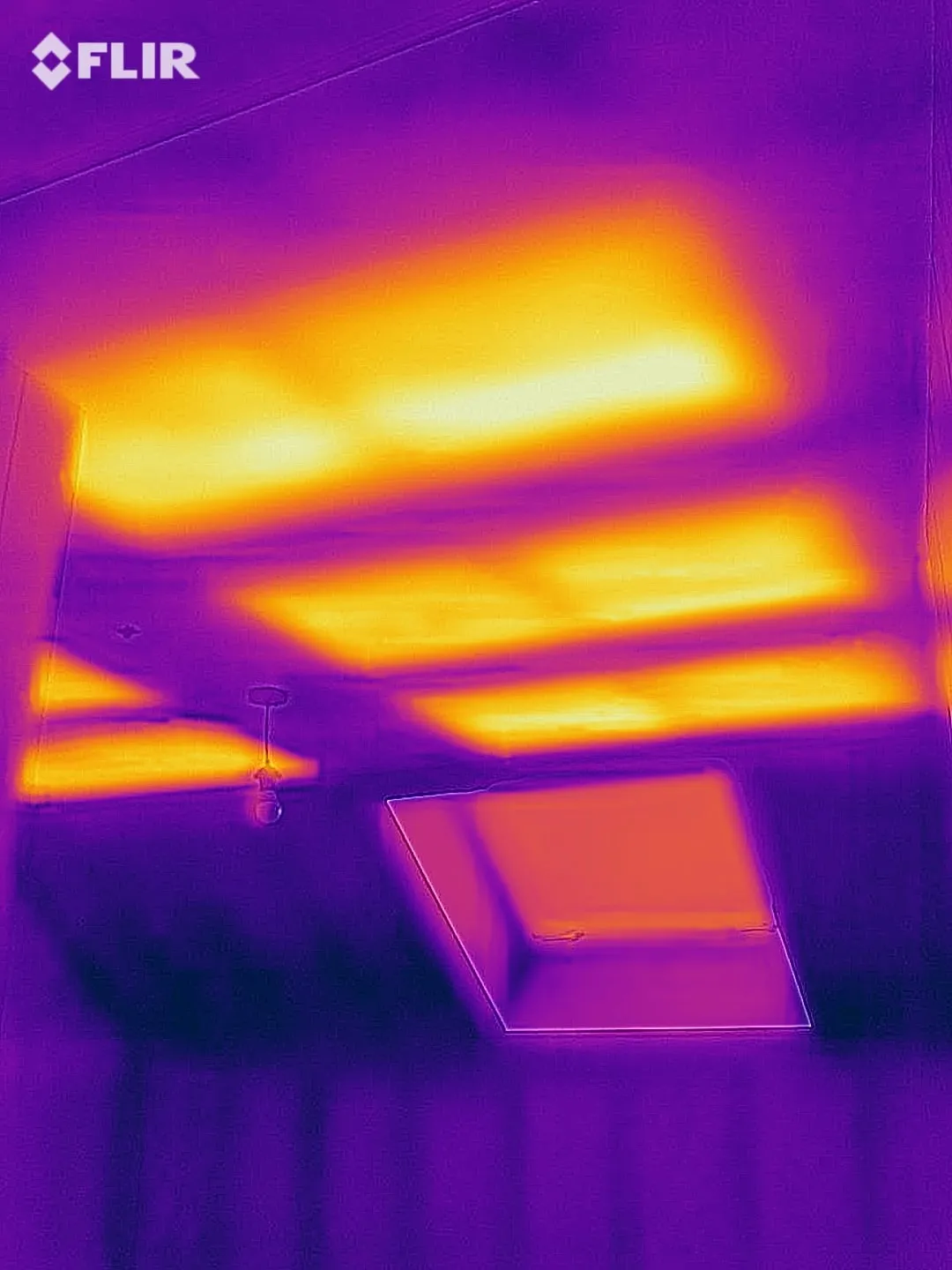
Borrow or buy a handheld infrared thermometer and go round the house measuring surface temperatures — walls, window reveals, floors, the corners behind furniture.
Where you find a surface significantly colder than its neighbours, you have found either an air leak or a gap in the insulation. That is where the money is going, and now you know where to spend the sealant.
And then: heat the room, not the house
This is where the honest caveat belongs, since the article is about not turning up the heat.
If you are alone in the house working in one room, heating the whole building to keep one person comfortable is enormously wasteful. Turn the central heating down and heat the room you are actually in.
That is the case for zoned infrared heating: it responds in minutes rather than hours, so it can be switched on for one room for two hours and switched off again. Yes, it uses electricity. It uses far less of it than conditioning eight rooms to keep one person warm.
A programmable or learning thermostat is worth having alongside it — set back when you are out or asleep, lift before you get up. Most households save more from scheduling than from any single fabric measure.
None of this is exotic. Seal the gaps, warm the surfaces, cover your feet, use the heat you are already making, and heat where you actually are. Then, if you still want to, turn the thermostat up.