Why 55 °C ceiling surface temperature?
Why a heated ceiling should run at about 55 °C. Emissivity, surface area and surface temperature under the Stefan–Boltzmann law, and where comfort sets the ceiling on temperature.
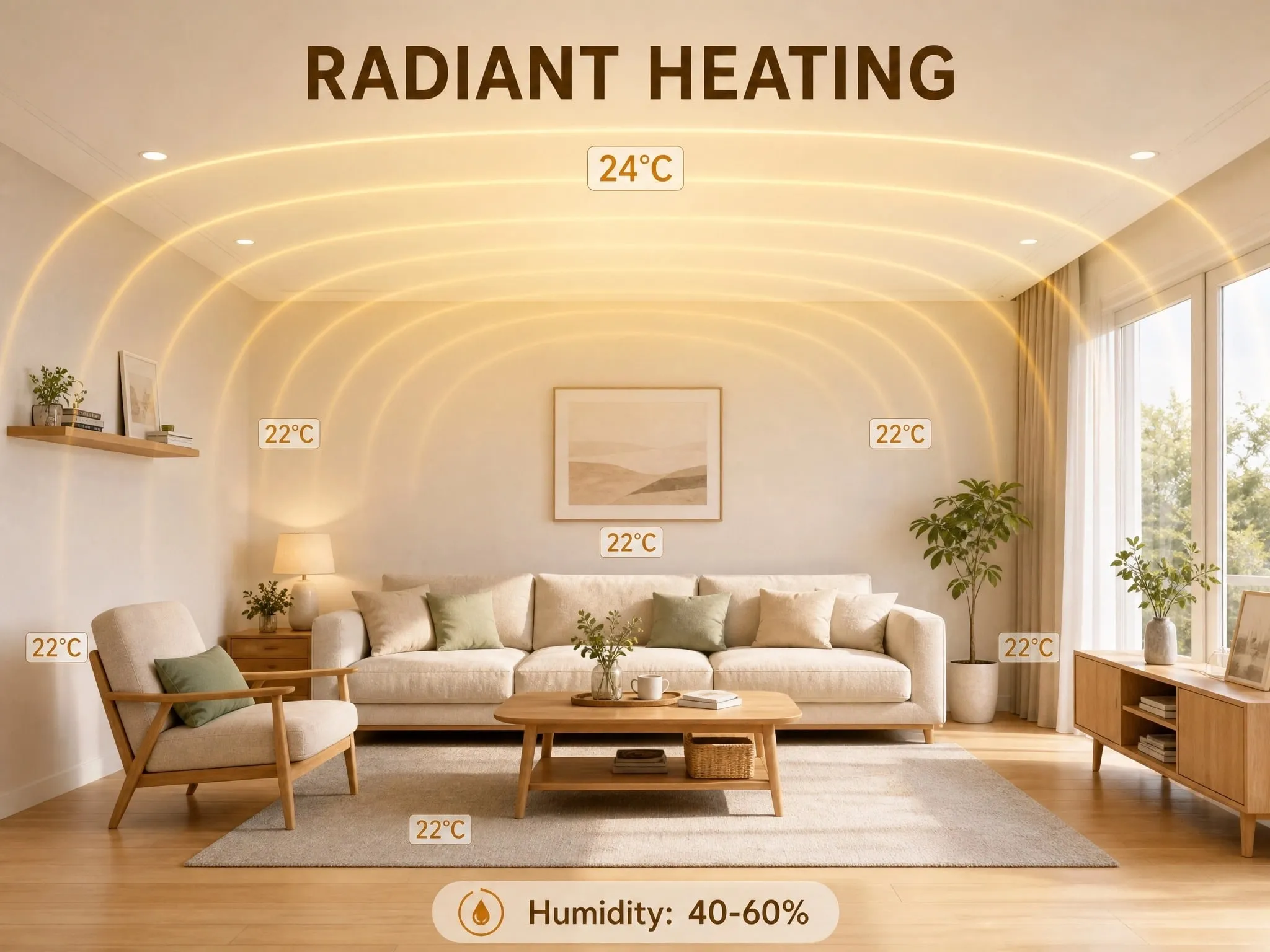
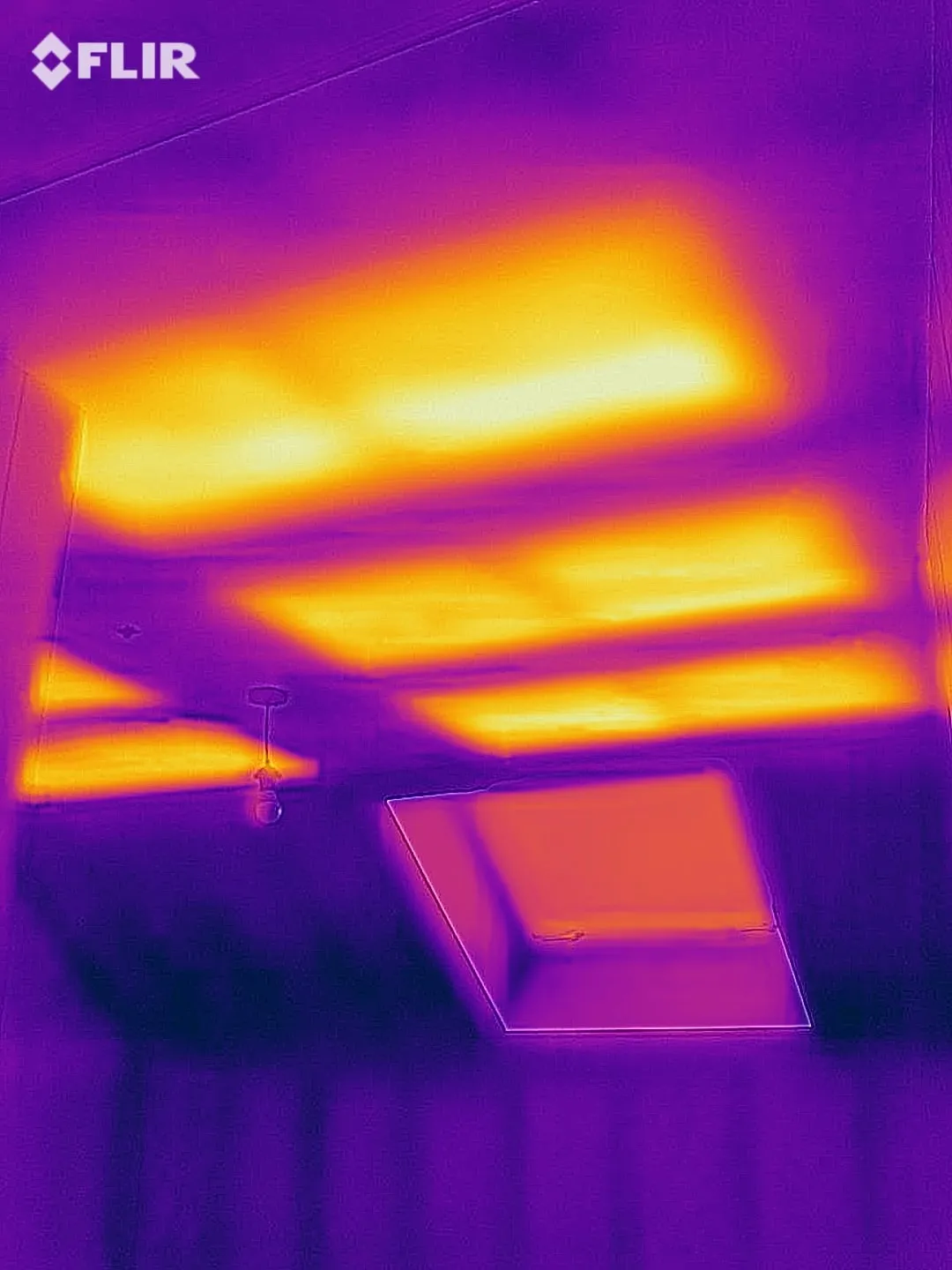
The goal of any heating system is a warm, comfortable room. Ceiling heating is no exception, but it is unusual in how it gets there: it heats principally by radiation. A radiant ceiling emits infrared from its surface, that radiation is absorbed by the floor, the furniture and the people below, and those warmed surfaces raise the temperature of the room in turn.
Not all radiant heat is equal, though. To get the most out of a radiant surface, three variables matter, and they come straight out of the Stefan–Boltzmann law.
The three variables
Surface material
A material’s ability to emit energy as radiation is described by its emissivity, a value between 0 and 1. Closer to 1 means it absorbs and emits radiation readily; closer to 0 means it barely does.
Fortunately, the materials a ceiling is actually finished in are all good emitters. Indoor paints, plaster and wallpaper sit between roughly 0.82 and 0.92. Human skin is one of the highest known emitters at about 0.98, which is why a radiant surface and a person exchange heat so effectively. Aluminium foil, at around 0.03, is one of the worst — which is precisely why it is used as a radiant barrier rather than a radiant emitter.
Surface area
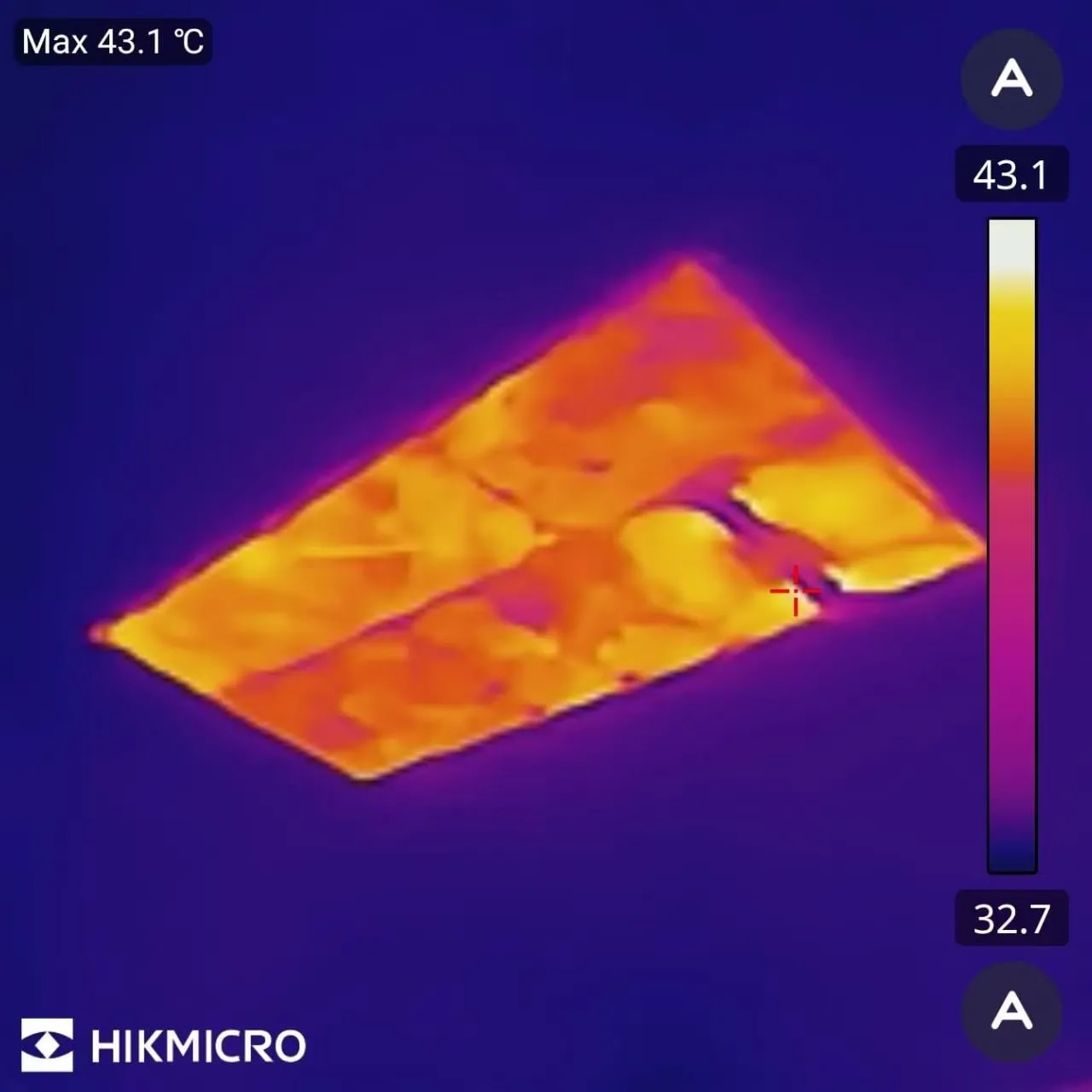
The larger the emitting area, the more heat can leave it as radiation. This is the case for a full-surface element: an element that heats its entire area evenly turns the whole ceiling into the emitter, rather than concentrating the output into a small, hot object hanging below it.
Surface temperature
Emitted power rises steeply with temperature — as the fourth power of absolute temperature, in fact. That is why the radiant heaters you find on the market run so hot: 85 to 100 °C for a typical panel, and well above 200 °C for industrial rod radiators.
So why stop at 55 °C?
Because the object is not to emit as much radiation as physically possible. It is to make a room comfortable for the people in it.
Comfort research on radiant asymmetry — the difference between the radiant temperature above you and the radiant temperature around you — is consistent on this point. As a warm ceiling gets hotter, the proportion of occupants who report discomfort climbs quickly. In practice it is the sensation of heat pressing down on the top of your head. A surface at around 55 °C sits at the point where the ceiling is doing real work without anyone noticing it is there.
There are three further advantages at that temperature:
- The building fabric is unaffected. At 55 °C there is no meaningful risk of plaster cracking or of the finish discolouring over time.
- It is safe to touch. Nothing about the ceiling becomes a hazard.
- It can be buried. A moderate surface temperature is what allows the element to be plastered over and forgotten for the life of the building.
When a hotter surface is the right answer
The 55 °C figure assumes you have the whole ceiling to work with. That is the case for ComfortScrim, which is embedded across the ceiling and skimmed over.
Where a full ceiling is not available — a retrofit where nothing can be built, an existing finished ceiling — the emitting area shrinks to a handful of mounted panels, and the only way to deliver the same heat from a smaller area is to run it hotter. That is why our surface-mounted PowerBoard 500 and 750 operate above the 55 °C figure. It is a deliberate trade: less construction, at the cost of a warmer, smaller emitter.
Given the choice, though, a large surface at a moderate temperature beats a small surface at a high one. If the aim is the most comfortable heat for the least energy, a radiant surface at around 55 °C is where you want to be.