PowerBoard vs standard infrared panels: what actually differs
Most infrared panels heat with a resistive wire and hang on the wall at 90 to 110 °C. PowerBoard uses a full-surface carbon-fibre film, goes into the ceiling, and runs cooler. Five differences that matter.
Infrared home heating usually arrives as a standalone panel: a rectangle of varying size, mounted on the surface of a wall or ceiling and plugged into the supply.
Inside, most of them work the same way. Electricity flows through a resistive wire, the wire heats up, the wire heats the panel’s face, and the face radiates down into the room. It works, and it works reasonably well.
PowerBoard is built differently, and the differences are worth setting out plainly rather than as a list of adjectives.
1. A full surface, not a wire
The heat in a PowerBoard comes from a carbon-fibre film that covers the whole area of the panel, not from a wire threaded across it.
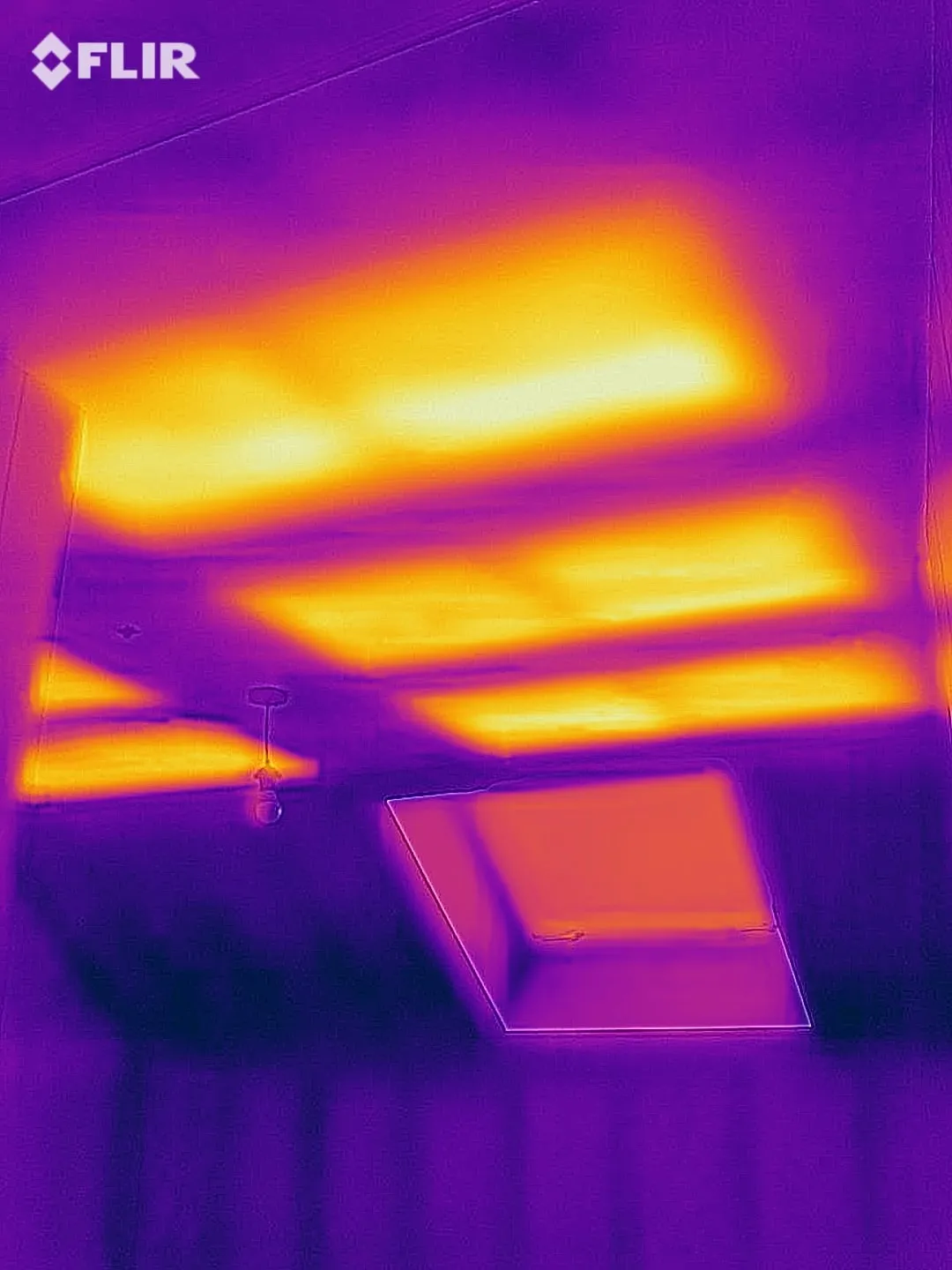
A wire is a line source. However carefully it is laid out, the panel face is hotter directly above the wire and cooler between the runs, and the panel spends energy evening that out. A full-surface element is warm everywhere at once, so the face reaches a uniform temperature without that internal shuffling, and less is lost through the back of the panel in the process.
In our own comparative testing, the PowerBoard ceiling system drew around 25% less energy than standard radiant panels under the same conditions. That is our test rather than a published study, and we will send you the method and the results if you want to check the reasoning.
2. It goes into the ceiling, not onto it
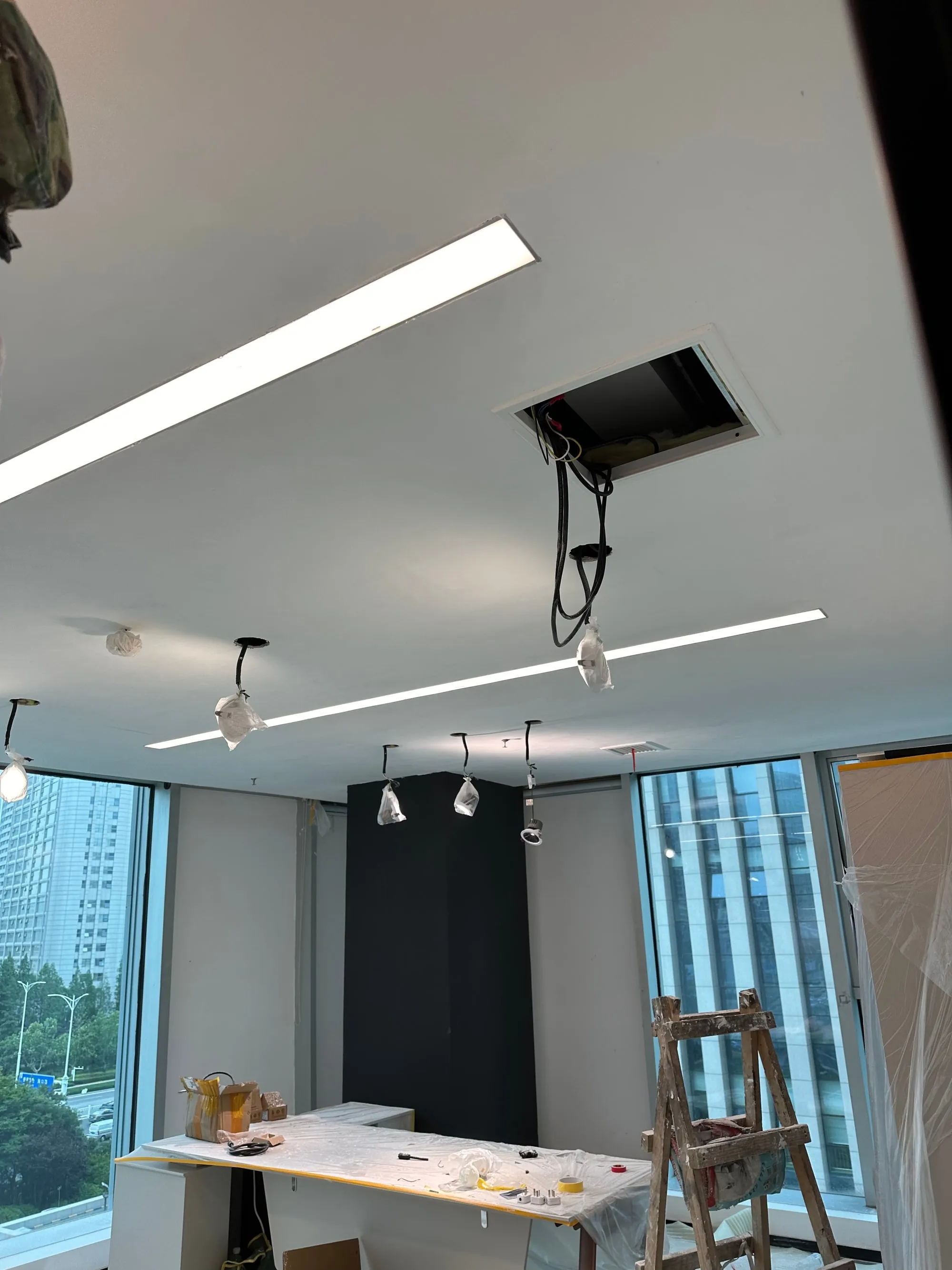
PowerBoard 250 is dimensioned as a standard 1200 × 600 mm board and replaces a gypsum panel in a suspended ceiling. Once fitted it is skimmed or painted over like any other board and disappears entirely.
A standard panel is an object in the room. It is mounted on the surface, it has visible edges and a visible cable, and it has to be designed around.
Where a new ceiling genuinely cannot be built, PowerBoard 500 and 750 mount on the surface instead — but that is the fallback, not the default.
3. Surface temperature
This is the difference occupants feel, and most do not know it is the reason.
Standard infrared panels commonly run at 90 to 110 °C. They are small emitters, so they have to be hot to deliver useful output. The result is a strong radiant asymmetry between your head and the rest of you: the “hot head” sensation, and a room that is warm in a beam and cool outside it.
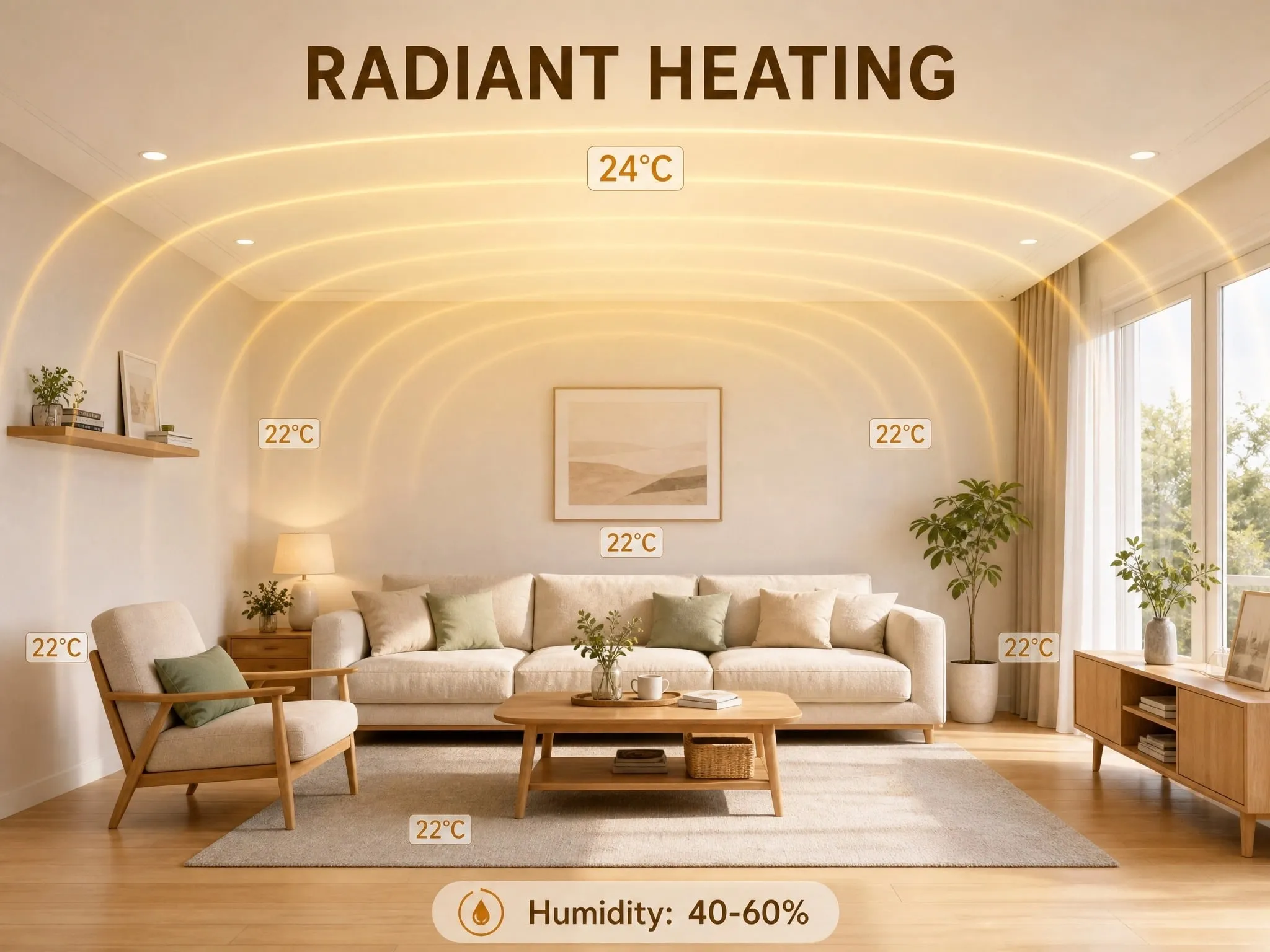
PowerBoard 250 is engineered around a surface temperature in the region of 55 °C, which comfort research identifies as the point where a warm ceiling stops being noticed. Larger area, lower temperature, same heat — and nobody looking up to work out where it is coming from.
4. Several emitters, not one
A standard panel is usually specified one to a room, which concentrates the heat into one part of it.
PowerBoard is designed to be distributed: several boards spread across the ceiling, so the emitting surface approximates the ceiling itself. That evens out the temperature across the room, which is both more comfortable and less wasteful than overheating one zone to compensate for a cold one.
5. Certification
PowerBoard is BEAB certified to IEC 60335-1 and CE and UKCA marked. Many panels on the market carry only a CE mark, which for an electrical appliance is largely a self-declaration by the manufacturer.
The difference is who did the testing. Ask for a certificate number, and ask which body issued it.
The verdict
None of these are exotic technical distinctions. They add up to a system that costs less to run, cannot be seen, does not cook the top of your head, heats the room evenly rather than in a beam, and has been independently tested.
If you want to see how it would lay out in your building, send us a plan.