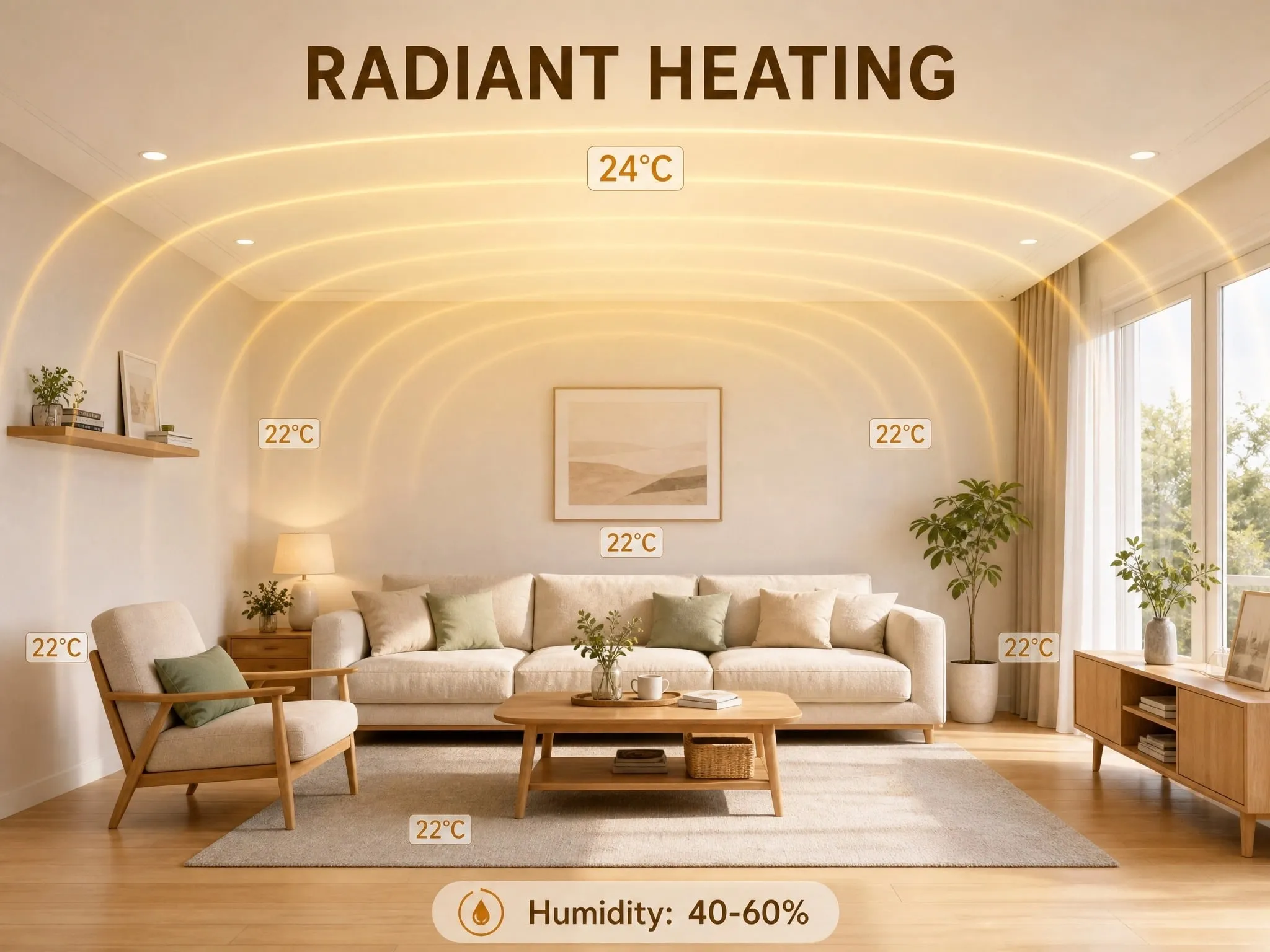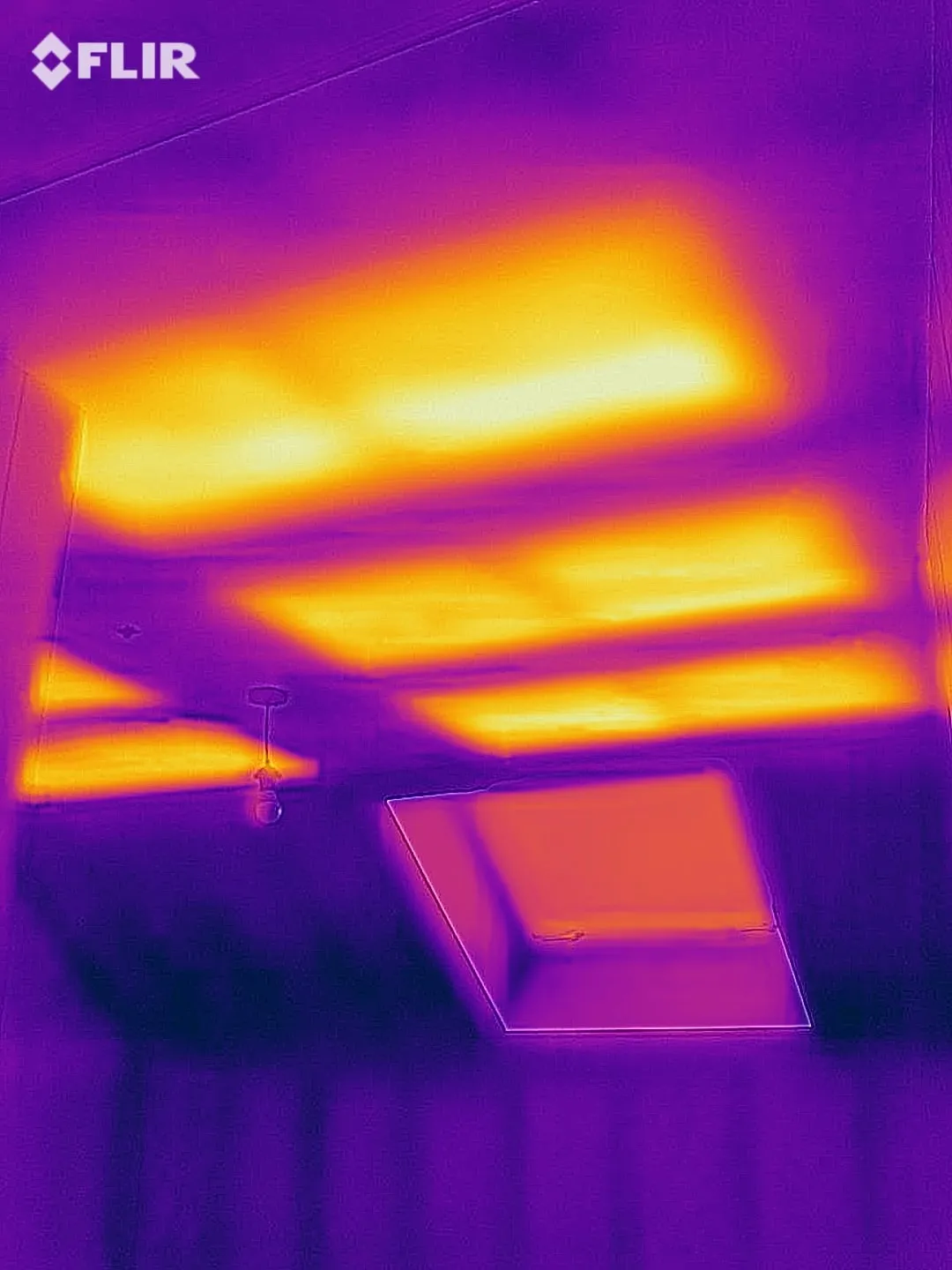
The benefits of infrared heating in schools
Classrooms are occupied in bursts, hold thirty heat-generating bodies, and are refurbished in six-week windows. Why radiant heating suits school buildings, and what it does for learning.
School buildings have an unusual heating profile. They are intensively occupied for six hours a day, empty for the other eighteen, empty again for thirteen weeks a year, and the estate is often a mixture of Victorian brick, 1960s system-build and a recent extension — each with completely different heat loss.
Then there is the fact that a classroom of thirty pupils is generating something like 3 kW of heat on its own, simply by being occupied.
Conventional wet systems handle this badly. Here is why radiant heating handles it better.
Response time matches occupancy
The single biggest source of waste in a school is heating an empty building.
A wet system with a screed or heavy radiators cannot be scheduled tightly. It has to be started hours before anyone arrives and it coasts for hours after they leave, because it cannot respond faster than that. So it runs.
A radiant electric element sits millimetres behind the finished surface with very little mass. It reaches working temperature in minutes. A classroom can be brought up before first period and dropped between sessions, and a hall used twice a week can be heated twice a week rather than continuously.
For a building empty most of the time, that is where the money is.
Zoning per room, not per block
Schools are rarely uniform. South-facing classrooms overheat while north-facing ones stay cold. The science block runs hot from equipment; the sports hall wants to be cool; the reception area wants to be welcoming.
Radiant systems zone room by room as standard, so each space is controlled to what it actually needs. There is no distribution circuit forcing a whole wing to share a schedule.
What it does for the classroom
The evidence on temperature and learning follows the same pattern as temperature and workplace performance: concentration, memory and reasoning all degrade outside the comfortable band, and pupils are less able than adults to compensate by moving or changing clothing.
Three specific properties matter in a classroom:
No air movement. Forced-air systems circulate dust and allergens around a room of thirty children, a meaningful proportion of whom will have asthma. Radiant heating moves nothing.
No dry air. Heating air hard drops relative humidity, which is the source of the dry throats and headaches that accumulate through a winter term. Radiant heating leaves the air alone.
Silence. No fans, no pumps, no pipework ticking as it warms. In a room where the teacher’s voice has to carry to thirty people, the background noise floor is not a trivial matter.
Even temperature. No radiator producing a hot seat next to it and a cold seat by the window. Whether a child can concentrate should not depend on where they sit.
Nothing exposed
Radiators in schools are a perennial problem: hot surfaces at child height, guards that need fitting and cleaning behind, units that get damaged, and wall space consumed in rooms that need it for storage and display.
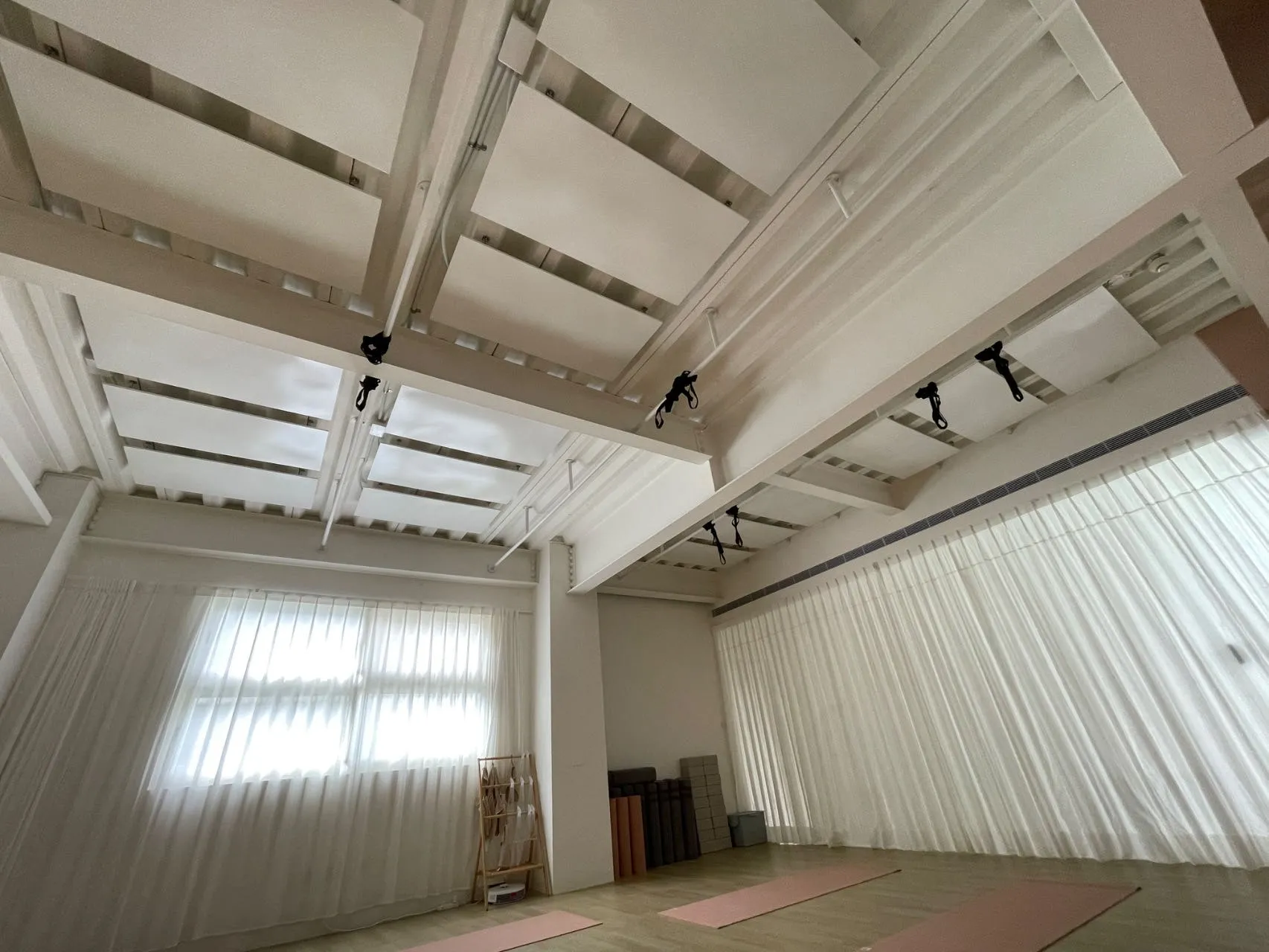
PowerBoard 250 is built into the ceiling and skimmed over. ComfortScrim goes behind the plaster. There is nothing to touch, nothing to damage, nothing to vandalise, and nothing to clean around. The walls come back for teaching.
Installation inside a six-week window
School refurbishment happens in the summer holiday, and the schedule is unforgiving.
A ceiling system installs at roughly twelve minutes a panel, with no pipework, no manifold, no pressure test and no screed drying time. There is no wet trade holding up the decorators. That difference is frequently what makes a summer programme achievable at all.
Maintenance afterwards is effectively nil: no moving parts, no water, no annual service, no plant room.
On efficiency, honestly
You will see claims of 30% or 40% energy savings attached to infrared in the education sector. We do not use those figures.
Electric heating is treated as 100% efficient at the point of use under SAP, but so is any electric heater; that is not a differentiator. The genuine saving comes from three places: occupants are comfortable at an air temperature two to three degrees lower (roughly 6% per degree, so 12 to 18%), the system can be scheduled tightly to occupancy, and it can be zoned per room.
In a building that stands empty most of the time, the scheduling is worth more than the other two combined — but the amount depends entirely on the timetable, and no article can tell you what it will be for your estate.
The counterweight is honest too: electricity costs more per kilowatt hour than gas in most markets. Whether the total is lower depends on the building, the tariff, and what is being replaced. Where it consistently wins is in buildings without a viable wet circuit, in phased refurbishment, and where the programme window is the binding constraint.
Carbon
Grid electricity has decarbonised substantially and continues to, while gas has not and will not. A building heated electrically today gets cleaner every year without anyone touching it. For an estate planning against a net zero target, that trajectory matters more than the position today.
If you are working on a school project, send us the drawings and we will do a room-by-room heat loss, a layout and a load schedule.