Is far infrared heating safe?
Far infrared is non-ionising radiation at the long, low-energy end of the spectrum. Where it sits relative to UV and x-rays, what our films actually emit, and why surface temperature is the real safety question.
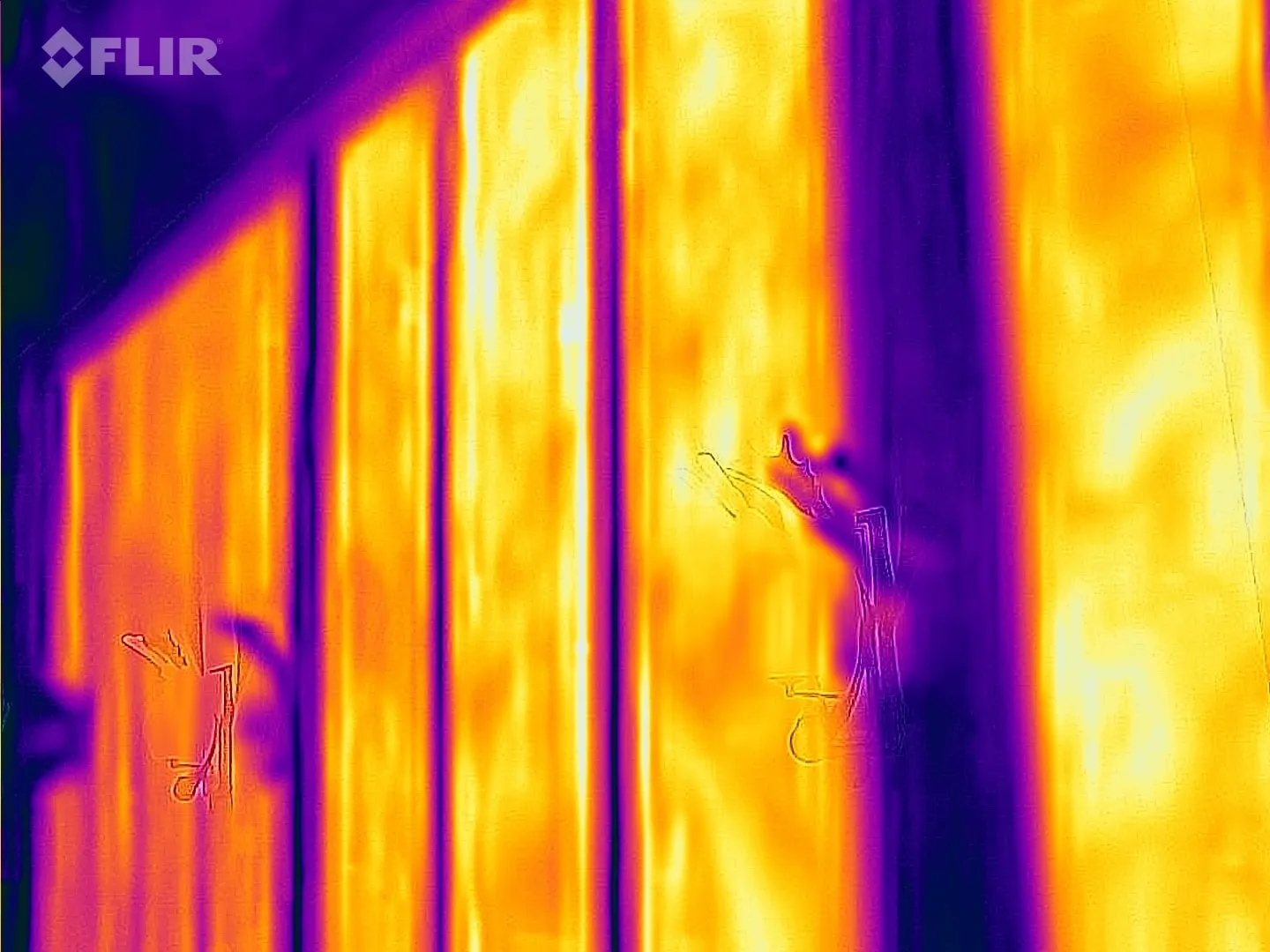
Far infrared heating operates in the non-ionising part of the electromagnetic spectrum. It carries too little energy per photon to alter the chemistry of anything it lands on, and at the surface temperatures a heating system uses it cannot burn skin.
That is the short answer. It is worth understanding why, because “radiation” is a word that does a lot of unnecessary frightening.
What radiation actually is
Radiation is the transmission of energy as photons — packets of energy travelling as waves. The shorter and more frequent the wave, the more energy each photon carries. The longer and less frequent the wave, the less.
At the short, high-energy end of the spectrum sit gamma rays and x-rays. These carry enough energy per photon to strip electrons from atoms, creating charged ions and free radicals, and it is that chemistry which does the damage. This is ionising radiation.
At the long, low-energy end sit infrared, microwaves and radio waves. These are non-ionising. They do not carry enough energy to knock an electron loose, so the chemical mechanism simply is not available to them. Ultraviolet sits between the two: short-wavelength UV can drive chemical reactions, long-wavelength UV largely cannot.
The distinction is not one of degree. It is a threshold, and infrared is on the safe side of it by a wide margin.
The sun makes the point
The radiation reaching the earth’s surface from the sun is roughly 6.8% ultraviolet, 38.9% visible light and 54.3% infrared.
The harmful component is the UV. UVC is the most energetic and is absorbed by the ozone layer. UVB penetrates the skin and can damage DNA. UVA penetrates more deeply and is responsible for much of the ageing effect of sun exposure.
Move into the visible and infrared bands and the photons no longer have the energy to drive those reactions. More than half of what the sun delivers to you is infrared, and it is not the part anyone puts sunblock on for. What it does is make you feel warm.
Not all infrared is the same
Infrared is itself divided into bands: A (near), B (mid) and C (far), from most to least energetic.
Infrared A, or near infrared, is the one with an open question attached. It is what you are exposed to standing near a furnace, an oven or an industrial process running above 200 °C, and there is ongoing debate about the effects of prolonged exposure, with some researchers arguing sun protection should account for it.
Infrared B and C — far infrared, roughly 3 to 25 µm — is a different proposition. The photon energies are far lower, penetration into tissue is minimal, and the practical health implications are negligible.
That distinction matters when you are comparing heaters, because a glowing 200 °C radiant bar and a 55 °C heated ceiling are not emitting the same thing. Hotter surfaces emit at shorter wavelengths. Cooler surfaces emit further into the far infrared.
What our films emit
We designed our wall and ceiling elements to run at surface temperatures of 45 to 55 °C. That choice does two things at once: it keeps the emission squarely in the far infrared, and it keeps the surface cool enough to touch without harm.
Third-party spectral testing put the emission from our films between roughly 7 and 13 µm, inside the 6 to 15 µm band — which is, not coincidentally, the same band the human body itself radiates in. Radiation at that wavelength is absorbed at the skin rather than passing into it.
Nothing exotic is happening. The element is warm, and warm objects radiate. It is the same physics as a sunlit wall.
The other half of the safety question
The wavelength is only half of it. The appliance producing it has to be safe too, and that is a question about electrical engineering rather than physics.
That is what certification covers. PowerBoard is BEAB certified to IEC 60335-1, the international safety standard for household electrical appliances, and SafeTech EGS is certified to UL 2683 with full-surface grounding across the whole element.
For anything that will be buried in a wall or floor for the life of a building, that second half is the part worth interrogating.
Air quality
One further point, since it is the most common follow-up question. Far infrared heating burns nothing, so there is no flue, no combustion products and no carbon monoxide. It also does not move air, so it does not circulate dust or allergens around a room the way a forced-air system does.
For a fuller treatment of the practical safety questions — overheating, children, wet rooms — see Are infrared heaters safe?